YouTube Side Hustle: How to Make Money Creating Videos

YouTube Side Hustle: How to Make Money Creating Videos – The Future of Smart Campaign Management

In the modern digital economy, YouTube has emerged as one of the most powerful platforms for earning money online. With over 2 billion logged-in monthly users, it offers content creators an unprecedented opportunity to build an audience, monetize content, and generate passive income. What once started as a hobby for sharing videos has transformed into a lucrative side hustle and even full-time career for many. With the rise of AI tools, automation, and smart campaign management, YouTube creators can now scale their channels, maximize revenue, and future-proof their side hustle in ways that were impossible just a few years ago. This comprehensive guide explains how beginners and experienced creators can leverage YouTube for income, while highlighting strategies for sustainable growth.Read more

Making Money With Social Media: TikTok, Instagram, and Beyond

Making Money With Social Media: TikTok, Instagram, and Beyond – How to Make Passive Income Online: The Future of Smart Campaign Management

In today’s digital era, social media is not just a platform for connecting with friends or sharing life updates—it has become a powerful avenue for generating income. Platforms like TikTok, Instagram, YouTube, and even emerging networks offer individuals the ability to make money online, build personal brands, and create passive income streams. With advancements in AI, automation, and smart campaign management, monetizing social media is becoming more strategic, scalable, and sustainable than ever before. This comprehensive guide will explore how beginners and seasoned creators alike can leverage social media to generate revenue, while embracing the tools and technologies shaping the future of online earning.Read more

Selling Digital Products Online: A Complete Guide for Beginners

Selling Digital Products Online: A Complete Guide for Beginners – How to Make Passive Income Online: The Future of Smart Campaign Management

In today’s fast-paced digital economy, selling digital products online has emerged as one of the most profitable ways to generate passive income. Unlike physical goods, digital products require no inventory, shipping, or complex logistics, making them an ideal choice for beginners and experienced entrepreneurs alike. With the rise of AI-driven tools, automation, and smart campaign management, selling digital products has become more efficient, scalable, and potentially lucrative than ever before. This guide explores everything a beginner needs to know about selling digital products online, creating sustainable income, and leveraging future-ready strategies.Read more

Affiliate Marketing 101: How to Make Passive Income Online

Affiliate Marketing 101: How to Earn Passive Income Online – The Future of Smart Campaign Management

In the digital era, making money online has become more accessible than ever. Among various online earning strategies, affiliate marketing stands out as one of the most lucrative and sustainable options. It offers the opportunity to earn passive income, allowing individuals to generate revenue even while they sleep. But in 2025, affiliate marketing is evolving into a data-driven, smart campaign management ecosystem where strategic planning, automation, and AI play crucial roles. This blog dives deep into affiliate marketing, explaining how it works, how you can start, and what the future holds for smart campaigns.Read more

The Rise of AI Chatbots and Virtual Assistants in Customer Engagement

The Rise of AI Chatbots and Virtual Assistants in Customer Engagement
Introduction

Customer engagement has become one of the most important success factors in the digital age. Modern consumers expect instant responses, personalized interactions, and seamless experiences across platforms. Traditional customer support models, which rely heavily on human agents and fixed working hours, struggle to meet these growing expectations. This gap has led to the rapid rise of AI chatbots and virtual assistants as essential tools for customer engagement.

AI chatbots and virtual assistants are no longer limited to simple question-and-answer tasks. Powered by artificial intelligence, machine learning, and natural language processing, they can now understand intent, learn from interactions, and deliver human-like conversations. Businesses across industries are adopting these technologies to enhance customer satisfaction, improve efficiency, and build long-term relationships.Read more

AI-Based SEO Optimization: How Search Rankings Will Be Controlled by Machine Learning.

AI-Based SEO Optimization: How Search Rankings Will Be Controlled by Machine Learning
Introduction

Search Engine Optimization has always evolved alongside the algorithms of search engines.
From keyword stuffing to high-quality content, from backlinks to user experience, SEO has kept changing in response to how search engines interpret the web. Now, we are entering a new stage of this development—AI-based SEO optimization, where machine learning plays a key role in determining search rankings.

Modern search engines no longer depend on fixed rules.
Instead, they use advanced AI and machine learning models to understand search intent, assess content quality, measure user satisfaction, and rank pages in real time. This change is reshaping how SEO operates and how businesses should approach organic growth.

In this blog, we examine how AI-based SEO optimization works, how machine learning influences rankings, and what the future holds for marketers, businesses, and content creators.

Understanding AI-Based SEO Optimization

AI-based SEO optimization involves using artificial intelligence and machine learning technologies to analyze, predict, and enhance search engine performance.
Unlike traditional SEO techniques that rely on fixed best practices, AI-driven SEO adapts continuously based on data patterns and user behavior.

Machine learning models process vast amounts of data, including search queries, click behavior, time spent on pages, bounce rates, content relevance, and website performance.
These models learn what fulfills user needs and adjust rankings based on that.

As a result, SEO is no longer about manipulating algorithms.
It is about aligning content and experiences with real user needs as interpreted by AI systems.

The Shift from Rule-Based Algorithms to Machine Learning

Earlier search algorithms operated based on predefined rules.
Keywords, meta tags, and backlinks were given fixed weights. While effective at the time, this method had limitations in understanding context and intent.

Machine learning changed this by allowing search engines to learn from data rather than follow strict rules.
AI systems analyze patterns across billions of searches and adjust ranking factors dynamically.

This shift allows search engines to understand language nuances, identify low-quality content, and reward truly useful pages.
SEO strategies must now evolve alongside these intelligent systems.

How Machine Learning Understands Search Intent

Search intent is central to AI-driven SEO.
Machine learning models analyze query patterns, user history, and contextual signals to determine what a user is really looking for.

For instance, the same keyword may have different intent depending on location, device, or past behavior.
AI takes these variables into account to deliver the most relevant results.

This means content must be optimized not just for keywords, but for intent.
Informational, navigational, and transactional content should be clearly aligned with user expectations to rank effectively.

Content Quality Through the Lens of AI

AI-based search systems evaluate content quality beyond word count or keyword density.
Machine learning considers clarity, depth, originality, structure, and usefulness.

User engagement signals are a major factor.
Pages that keep users engaged, answer questions clearly, and provide a smooth reading experience are favored.

This pushes marketers to focus on creating meaningful content rather than relying on shortcuts.
High-quality, user-centric content has become the most reliable SEO strategy.

Semantic Search and Contextual Understanding

Machine learning enables semantic search, where search engines understand context rather than matching exact keywords.
AI analyzes relationships between words, topics, and concepts.

This allows content to rank even if it doesn’t include exact keyword phrases.
Relevance is judged based on topical authority and contextual alignment.

For SEO, this means building comprehensive content that covers topics in depth rather than targeting isolated keywords.

User Experience as a Ranking Signal

AI-driven SEO places strong emphasis on user experience.
Machine learning models analyze how users interact with websites, including page speed, mobile usability, navigation, and visual stability.

Positive experiences signal value, while poor experiences lower rankings.
AI continuously evaluates these factors, making UX optimization an essential part of SEO.

Websites that prioritize speed, accessibility, and ease of use gain a competitive edge in AI-controlled rankings.

Behavioral Signals and Ranking Decisions

Machine learning relies heavily on behavioral data.
Metrics such as click-through rates, dwell time, pogo-sticking, and return visits provide insight into user satisfaction.

AI models link these behaviors with content quality and relevance.
Pages that consistently meet user expectations are rewarded with higher visibility.

This reinforces the importance of delivering content that truly solves problems rather than simply attracting clicks.

AI and Keyword Optimization in the Modern Era

Keywords are still important, but their role has changed.
AI-based SEO focuses on topic modeling rather than exact matches.

Machine learning identifies keyword clusters and semantic variations that represent a topic.
Content optimized around these clusters performs better than pages targeting single keywords.

This approach improves relevance and aligns content with how AI interprets search queries.

Predictive SEO and Ranking Forecasting

AI allows for predictive SEO, where machine learning forecasts ranking changes and traffic trends.
By examining historical data and emerging patterns, AI predicts how content may perform.

Marketers can anticipate ranking fluctuations, algorithm changes, and competitive shifts.
This proactive approach allows strategic optimization before performance declines.

Predictive SEO transforms optimization from reactive to strategic planning.

AI-Powered Technical SEO Optimization

Technical SEO benefits greatly from AI.
Machine learning identifies crawl issues, indexing problems, and performance bottlenecks automatically.

AI systems analyze server logs, site structure, and page performance to suggest improvements.
This ensures search engines can access and understand content efficiently.

Automated technical optimization reduces errors and enhances overall SEO health.

Voice Search and AI-Based Rankings

Voice search is growing quickly, and AI plays a key role in interpreting conversational queries.
Machine learning understands natural language and context in voice searches.

SEO strategies must adapt by focusing on conversational content, clear answers, and structured data.
Pages optimized for voice intent gain visibility in AI-driven search results.

This trend highlights the importance of human-like communication in content creation.

Visual Search and Machine Learning

AI-based SEO goes beyond text.
Machine learning supports visual search by examining images, patterns, and visual elements.

It is important to optimize images, visuals, and multimedia content.
AI assesses the relevance and quality of content across various formats.

Visual SEO is an expanding area within machine-learning-driven search optimization.

AI, Personalization, and Search Results

Machine learning allows for personalized search experiences.
The results depend on user behavior, preferences, and context.

This means rankings are not the same for everyone.
SEO success depends on how well content matches specific audience needs rather than just achieving a general position.

Understanding different audience groups and their intentions is key in AI-driven search environments.

Ethical SEO in an AI-Controlled Ecosystem

AI-based SEO requires ethical practices.
Unethical strategies are quickly identified by machine learning models.

Transparency, honesty, and user-focused optimization are crucial.
Ethical SEO helps build long-term trust with both users and search engines.

Brands that focus on integrity will benefit most from AI-based ranking systems.

Challenges in AI-Based SEO Optimization

Even though AI-based SEO offers many benefits, it comes with challenges.
The lack of algorithm transparency makes it difficult to understand why certain content is ranked higher.

The reliance on data and the speed of changes make continuous learning necessary.
SEO professionals need to stay flexible and analytical.

Human expertise remains essential in shaping strategies and interpreting AI insights.

The Future of SEO Under Machine Learning Control

The future of SEO will be more automated, predictive, and user-centered.
Machine learning models will become more advanced, assessing intent, satisfaction, and trust.

SEO professionals will move from executing tactics to managing strategies.
Creativity, storytelling, and brand authority will be more important than technical shortcuts.

AI will not replace SEO—it will change how it is done.

Conclusion

AI-based SEO represents a major change in how search rankings are decided.
Machine learning has transformed search engines into smart systems that value relevance, quality, and user experience.

Success in this new era depends on using AI insights, focusing on genuine value creation, and aligning strategies with user intent.

As machine learning continues to develop, businesses that adapt early will lead in organic search.
The future of SEO belongs to those who understand not only algorithms, but also the people behind the searches.

Predictive Analytics in Digital Marketing: How AI Will Forecast Customer Behavior

Predictive Analytics in Digital Marketing: How AI Will Forecast Customer Behavior
Introduction

Digital marketing has moved far beyond basic analytics and historical reporting. Today, businesses no longer want to know only what happened yesterday—they want to understand what will happen next. This demand has given rise to predictive analytics, one of the most powerful applications of Artificial Intelligence in digital marketing.

Predictive analytics uses AI, machine learning, and advanced data modeling to forecast future customer behavior. It helps marketers anticipate user needs, predict buying decisions, reduce churn, and optimize campaigns before results decline. Instead of reacting to customer actions, brands can now act proactively.Read more

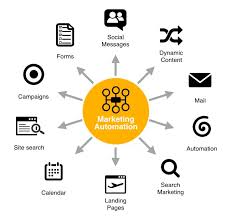
AI-Powered Marketing Automation: The Future of Smart Campaign Management

AI-Powered Marketing Automation: The Future of Smart Campaign Management
Introduction

What once depended heavily on manual planning, guesswork, and repetitive execution is now being transformed by Artificial Intelligence (AI). Among all AI-driven innovations, AI-powered marketing automation stands out as a game changer. It is redefining how brands plan, execute, analyze, and optimize marketing campaigns across digital platforms.

Today’s consumers expect personalized experiences, instant responses, and relevant content at every touchpoint. Meeting these expectations manually is nearly impossible, especially for growing businesses and startups. This is where AI-powered marketing automation steps in. By combining machine learning, data analytics, and automation tools, marketers can run smarter campaigns with better accuracy, lower costs, and higher returns.Read more

Profitable Digital Business Ideas for Beginners

Profitable Digital Business Ideas for Beginners (A Simple & Honest Guide)

Starting a business no longer requires a big office, heavy investment, or years of experience. Thanks to the internet, anyone with basic digital skills and consistency can build a profitable digital business. For beginners especially, digital businesses are attractive because they are low-cost, flexible, and scalable.Read more

PPC Advertising startups with Limited Budget

PPC Advertising startups with Limited Budget( A Smart & Practical companion)

Running a incipiency is instigative Tips for Sta, but let’s be honest — budget constraints are real. Every rupee mattersespecially when you’re trying to attract guests snappily. This is where PPC( Pay– Per- Click) advertising can be both a blessing and a challenge. When done right, PPC can bring presto business and leads. When done wrong, it can drain your budget without results.

This blog is written especially for startups with limited budgets, in a conversational and easy– to- understand tone. It’s 100 plagiarism-freepractical, and concentrated on helping authors and marketers get maximum returns from minimal announcement spend.

Why PPC Is Important for BudgetConscious Startups

Unlike SEO or content marketing, PPC does n’t take months to show results. It gives startups immediate visibility on platforms like Google, Facebook, and Instagram. For new businesses floundering to get noticed, PPC helps test ideasvalidate demand, and acquire early guests.

stilllimited budgets mean startups can not go trial– and- error advertising. Every crusade must be planned strategically. The thing is n’t to spend further, but to spend smarter.

1. Start with Clear pretensions, Not Just Advertisements

One of the biggest miscalculations startups make is running PPC advertisements without clear objects. Before spending a single rupee, define what success looks like. Do you want website business, leads, app installs, or direct deals?

Clear pretensions help you choose the right platformfollowership, and announcement format. When pretensions are unclearbudgets get wasted on clicks that do n’t convert.

2. Choose the Right PPC Platform

You do n’t need to announce far and wideChoose platforms grounded on where your followership actually spends time.

Google Advertisements works best when people are laboriously searching for your product or service.

Facebook & Instagram Advertisements are ideal for brand mindfulness and visual liar.

LinkedIn Advertisements suit B2B startups targeting professionals and decision– makers.

For startups with limited budgetsstarting with one platform and learning it’s far better than spreading plutocrat across numerous channels.

3. Focus on High– Intent Keywords

still, keyword selection can make or break your crusade, If you’re using Google AdvertisementsAvoid broad keywords that attract inapplicable clicks. ratherconcentrate on long– tail and highintent keywords.

For illustrationrather of bidding on “ digital marketing, ” target “ digital marketing services for small businesses. ” These keywords may have lower hunt volume but advanced conversion eventuality.

This approach reduces wasted spend and improves ROI.

4. Set Daily Budgets and Bidding Limits

Startups should always control spending tightly. Set diurnal budgets to avoid overspending. Choose bidding strategies that align with your pretensionssimilar as cost– per- click or cost– per- conversion.

noway let juggernauts run unboundedRegular monitoring ensures you do n’t burn plutocrat overnight due to incorrect settings.

5. Write Simple, Clear, and Applicable Ad Copy

You do n’t need fancy words to win clicks. Clear messaging workshop more than creative fluff. Your announcement should incontinently tell druggies

What problem you break

What makes you different

5. Write Simple, Clear, and Relevant Ad Copy

You don’t need complicated or overly creative language to get results from PPC. In fact, clarity almost always beats cleverness—especially for startups. Your ad copy should instantly answer three basic questions in the user’s mind:

What problem do you solve?

How are you different or better?

What should the user do next?

When people see your ad, they decide within seconds whether to click. Avoid buzzwords and focus on real benefits. Use language your customers actually use. A clear call-to-action like “Get a Free Demo,” “Start Your Trial,” or “Book a Free Consultation” often performs better than vague phrases.

For limited budgets, strong ad copy helps improve click-through rates, which can lower your cost per click and stretch your ad spend further.

6. Create Dedicated Landing Pages, Not Just Website Links

Sending paid traffic to your homepage is one of the most common and costly mistakes startups make. PPC clicks are valuable, and every visitor should be guided toward one clear action.

A good PPC landing page should:

Match the message of your ad

Focus on a single goal (lead, signup, or purchase)

Load fast on mobile devices

Have a clear headline, benefits, and call-to-action

When ads and landing pages are aligned, conversion rates increase—meaning you get more results without increasing your budget.

7. Use Audience Targeting to Reduce Waste

One major advantage of PPC advertising is precise targeting. Startups with limited budgets must use this feature wisely.

Instead of targeting everyone, narrow your audience by:

Location (city, state, or service area)

Age, interests, or behaviors

Job roles or industries (for B2B startups)

Smaller, more relevant audiences often perform better and cost less. The goal is not more clicks—it’s better clicks.

8. Leverage Retargeting for Higher ROI

Retargeting is one of the smartest PPC strategies for startups. Not everyone converts on their first visit, and that’s completely normal.

Visited your website

Viewed a product

Filled a form but didn’t submit

Since these users already know your brand, retargeting clicks are usually cheaper and convert better. Even with a small budget, retargeting can deliver strong returns.

9. Test Small, Learn Fast, and Optimize Continuously

You don’t need large budgets to test PPC—just a smart testing mindset. Run small experiments with different:

Headlines

Ad descriptions

Images or creatives

Calls-to-action

Pause what doesn’t work and scale what does. Continuous optimization is how startups compete with bigger brands without matching their budgets.

10. Track Conversions, Not Just Clicks

Clicks alone don’t pay the bills—conversions do. Always set up proper conversion tracking using tools like Google Analytics, Meta Pixel, or platform-specific tracking.

By tracking real actions such as form submissions, purchases, or calls, you can see exactly where your money is working and where it’s being wasted. This data-driven approach helps startups make smarter decisions and avoid emotional spending.

Final Thoughts: Smart Spending Beats Big Spending

PPC advertising doesn’t have to be expensive to be effective. For startups with limited budgets, success comes from strategy, focus, and constant improvement—not from spending more money.

When goals are clear, targeting is tight, messaging is relevant, and performance is tracked, PPC can become one of the most powerful growth tools for early-stage businesses.