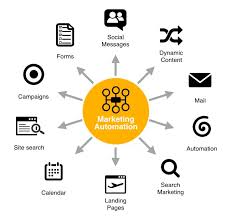
AI-Powered Marketing Automation: The Future of Smart Campaign Management
Introduction
What once depended heavily on manual planning, guesswork, and repetitive execution is now being transformed by Artificial Intelligence (AI). Among all AI-driven innovations, AI-powered marketing automation stands out as a game changer. It is redefining how brands plan, execute, analyze, and optimize marketing campaigns across digital platforms.
Today’s consumers expect personalized experiences, instant responses, and relevant content at every touchpoint. Meeting these expectations manually is nearly impossible, especially for growing businesses and startups. This is where AI-powered marketing automation steps in. By combining machine learning, data analytics, and automation tools, marketers can run smarter campaigns with better accuracy, lower costs, and higher returns.
This blog explores how AI-powered marketing automation works, why it is the future of smart campaign management, and how businesses can leverage it to stay competitive in the digital era.
What Is AI-Powered Marketing Automation?
AI-powered marketing automation refers to the use of artificial intelligence technologies to automate, optimize, and personalize marketing activities. Unlike traditional automation, which follows fixed rules and workflows, AI-driven systems learn from data, adapt to user behavior, and continuously improve performance over time.
These systems analyze vast amounts of customer data such as browsing behavior, purchase history, engagement patterns, and demographic details. Based on this data, AI can make intelligent decisions—such as when to send an email, which ad to display, what content to recommend, and how much budget to allocate.
In simple terms, AI-powered marketing automation does not just execute tasks; it thinks, predicts, and optimizes. This makes it far more effective than manual or rule-based marketing systems.
The Shift from Traditional Marketing to Smart Campaign Management
Traditional digital marketing relies heavily on human input. Marketers plan campaigns, select audiences, schedule content, and monitor performance manually. While this approach works on a small scale, it becomes inefficient and error-prone as campaigns grow more complex.
Smart campaign management powered by AI eliminates many of these challenges. Instead of manually adjusting strategies, AI systems analyze real-time data and make instant optimizations. Campaigns become dynamic rather than static, adapting automatically to changing customer behavior and market trends.
This shift allows marketers to focus less on repetitive tasks and more on strategy, creativity, and brand building. AI does not replace marketers; it enhances their capabilities.
How AI Transforms Campaign Planning
Campaign planning is one of the most critical stages in digital marketing. AI simplifies this process by providing data-driven insights that improve decision-making.
AI tools analyze historical campaign data, competitor strategies, seasonal trends, and customer preferences to suggest optimal campaign structures. They can identify which channels perform best for specific goals, such as lead generation, brand awareness, or conversions.
Instead of relying on assumptions, marketers can plan campaigns backed by predictive intelligence. This leads to better targeting, realistic goal setting, and higher chances of success.
Intelligent Audience Segmentation and Targeting
One of the strongest advantages of AI-powered marketing automation is advanced audience segmentation. Traditional segmentation often categorizes users based on basic parameters like age, gender, or location. AI goes far beyond this.
AI analyzes behavioral data to create micro-segments based on interests, intent, engagement level, and purchase probability. It can identify high-value customers, inactive users, and potential leads with remarkable accuracy.
This intelligent targeting ensures that the right message reaches the right audience at the right time. As a result, campaigns become more relevant, engagement increases, and conversion rates improve significantly.
Personalization at Scale
Modern consumers expect personalized experiences, but delivering personalization at scale is a major challenge. AI-powered automation makes this possible.
AI systems dynamically customize content, email subject lines, product recommendations, ad creatives, and landing pages based on individual user behavior. Each customer experiences a unique journey tailored to their preferences and actions.
This level of personalization builds trust, strengthens brand relationships, and increases customer loyalty. Businesses no longer need large teams to personalize campaigns—AI handles it efficiently and accurately.
AI in Content Creation and Distribution
Content remains the backbone of digital marketing, and AI is transforming how it is created and distributed. AI-powered tools assist marketers in generating content ideas, optimizing headlines, and structuring content for better engagement.
AI can analyze which content formats perform best on specific platforms and recommend ideal posting times. It can also repurpose content across channels, ensuring consistent messaging while saving time and resources.
By automating content distribution and optimization, marketers can maintain a strong online presence without manual intervention.
Smarter Email Marketing with AI Automation
Email marketing continues to deliver strong ROI, and AI has taken it to the next level. AI-powered email automation goes beyond scheduled campaigns.
It personalizes subject lines, content, and call-to-action buttons for each recipient. It also predicts which users are most likely to open, click, or convert.
This intelligent approach increases open rates, reduces unsubscribes, and improves overall campaign performance.
AI-Driven Paid Advertising Optimization
Managing paid advertising campaigns manually can be expensive and time-consuming. AI-powered marketing automation optimizes paid ads with precision.
AI continuously analyzes ad performance, audience response, and budget allocation. It automatically adjusts bids, creatives, and targeting to maximize return on ad spend. Poor-performing ads are paused, while high-performing variations receive more budget.
This real-time optimization ensures that marketing budgets are used efficiently, making AI especially valuable for startups and small businesses with limited resources.
Predictive Analytics and Performance Forecasting
One of the most powerful aspects of AI-powered marketing automation is predictive analytics. AI does not just analyze past data; it predicts future outcomes.
By identifying patterns and trends, AI can forecast campaign performance, customer lifetime value, and conversion probability. Marketers can anticipate challenges and opportunities before they occur.
This predictive capability enables proactive decision-making, reducing risks and increasing campaign success rates.
Customer Journey Mapping and Automation
Customer journeys are no longer linear. Users interact with brands across multiple channels before making a decision. AI-powered automation maps these complex journeys accurately.
AI tracks user interactions across websites, social media, email, and ads. Based on this data, it automates personalized follow-ups, retargeting campaigns, and nurturing sequences.
This ensures a seamless and consistent customer experience across all touchpoints, improving engagement and conversions.
Real-Time Decision Making and Optimization
Speed is critical in digital marketing. AI-powered marketing automation enables real-time decision-making.
As soon as user behavior changes, AI systems respond instantly. Whether it is adjusting ad bids, modifying content, or triggering personalized messages, actions happen without delay.
This agility gives businesses a competitive advantage, allowing them to adapt quickly in a fast-changing digital landscape.
Improved ROI and Cost Efficiency
One of the primary reasons businesses adopt AI-powered marketing automation is improved return on investment. By eliminating guesswork and manual errors, AI ensures resources are allocated where they deliver the most value.
Automation reduces operational costs, minimizes wasted ad spend, and improves campaign efficiency. Over time, AI systems learn and optimize continuously, delivering better results with lower effort.
This makes AI-powered automation a smart long-term investment for businesses of all sizes.
Challenges and Considerations in AI Marketing Automation
While AI-powered marketing automation offers numerous benefits, it is not without challenges. Data quality is critical; inaccurate or incomplete data can affect AI performance.
Businesses must also ensure transparency, ethical data usage, and compliance with privacy regulations. Human oversight remains essential to guide strategy, maintain brand voice, and ensure ethical practices.
When implemented thoughtfully, these challenges can be managed effectively.
The Future of Smart Campaign Management
The future of digital marketing lies in intelligent automation. As AI technologies continue to evolve, marketing automation will become more predictive, conversational, and autonomous.
We can expect deeper personalization, smarter voice and visual search integration, and more advanced customer behavior analysis. Marketers who embrace AI-powered automation early will gain a significant competitive advantage.
Rather than replacing marketers, AI will act as a strategic partner—handling data, optimization, and execution while humans focus on creativity, storytelling, and brand strategy.
Conclusion
AI-powered marketing automation is no longer a futuristic concept; it is the present and future of smart campaign management. It enables businesses to deliver personalized, data-driven, and high-performing campaigns with efficiency and precision.
In an increasingly competitive digital world, brands that adopt AI-powered automation will not only survive but thrive. By combining human creativity with machine intelligence, marketers can unlock new levels of growth, engagement, and success.
As digital marketing continues to evolve, one thing is clear: AI-powered marketing automation is shaping the future, and smart marketers are already embracing it.


